Share This Event
Why join a "Europe & Liberty" Seminar?
The world is changing rapidly. Political, economic, and technological developments are reshaping our societies, raising important questions about freedom, democracy, prosperity, and the future of Europe. Understanding these changes requires more than following the news—it requires engaging with the ideas and institutions that have shaped free and prosperous societies.
This summers Europe & liberty Seminar in Kopaonik, organized by IES Europe in collaboration with European Students for Liberty, brings together ambitious students and young professionals from across the globe for several days of learning, discussion, and intellectual exchange. The seminar is designed to provide participants with a deeper understanding of the principles of individual liberty, the rule of law, free markets, and limited government while fostering lasting connections with like-minded peers.
How it works
The Europe & Liberty Seminar combines academic excellence with an interactive learning environment. Participants can learn from distinguished scholars, researchers, and policy experts representing a wide range of disciplines, including economics, law, political science, philosophy, history, and public policy.
The seminar follows a discussion-oriented format inspired by the Socratic tradition. Lectures are concise and designed to introduce key concepts, leaving plenty of time for questions, debate, and exchange of ideas. Learning continues outside the classroom through shared meals, networking events, and informal conversations, making the seminar a truly immersive experience.
To encourage meaningful interaction, participation is limited to a select group of highly motivated students and young professionals from across the world.
Who pays what
The seminar is free of charge. Accommodation, meals, and all academic activities are fully covered by the organizers.
Participants are only expected to arrange and cover their own transportation to and from Kopaonik, Serbia.
Where is the seminar taking place?
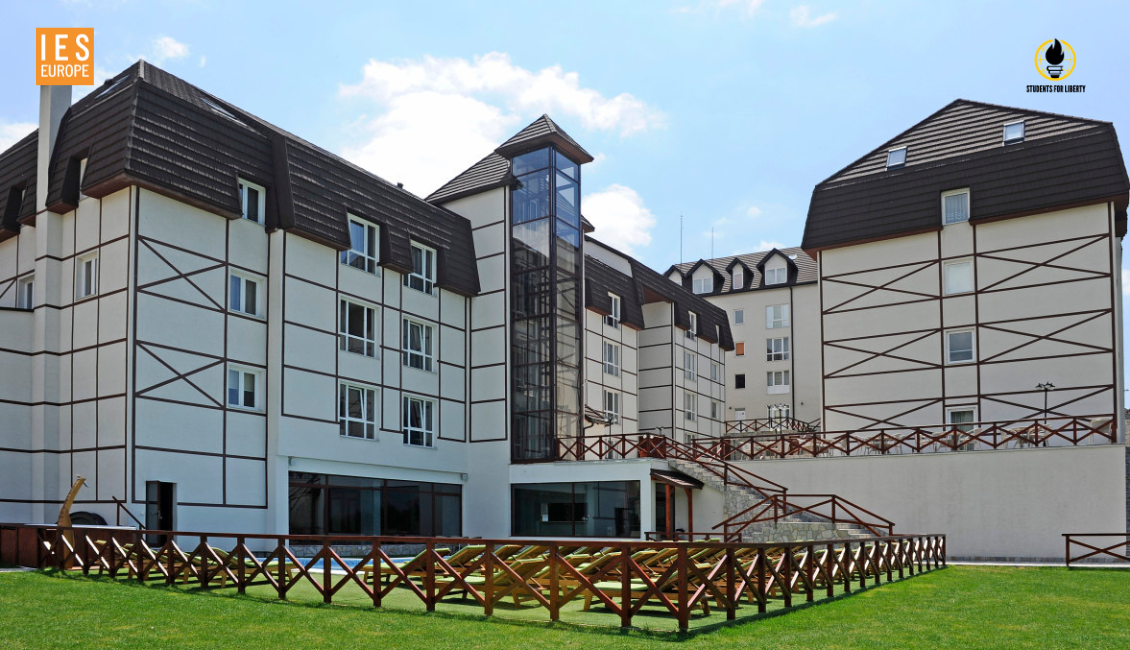
The seminar will take place in Kopaonik, Serbia, one of the Balkans' most beautiful mountain destinations. Participants will be staying at the Kraljevi Čardaci Hotel ( Google Maps Link). Surrounded by breathtaking nature, Kopaonik provides an ideal setting for focused learning, engaging discussions, and building friendships with participants from across Europe.
What is the working language?
The working language of the seminar is English. All lectures, discussions, and seminar materials will be conducted in English.
How to apply
Applying is simple. Complete the application form by clicking on the "Apply here" tab and submitting the required information.
Applications are reviewed on a rolling basis, and successful applicants will be notified as soon as possible. Once accepted, participants will receive further details about the program and practical arrangements.
More questions
If you have any questions about the seminar or the application process, please don't hesitate to contact us at:
contact@ies-europe.org