
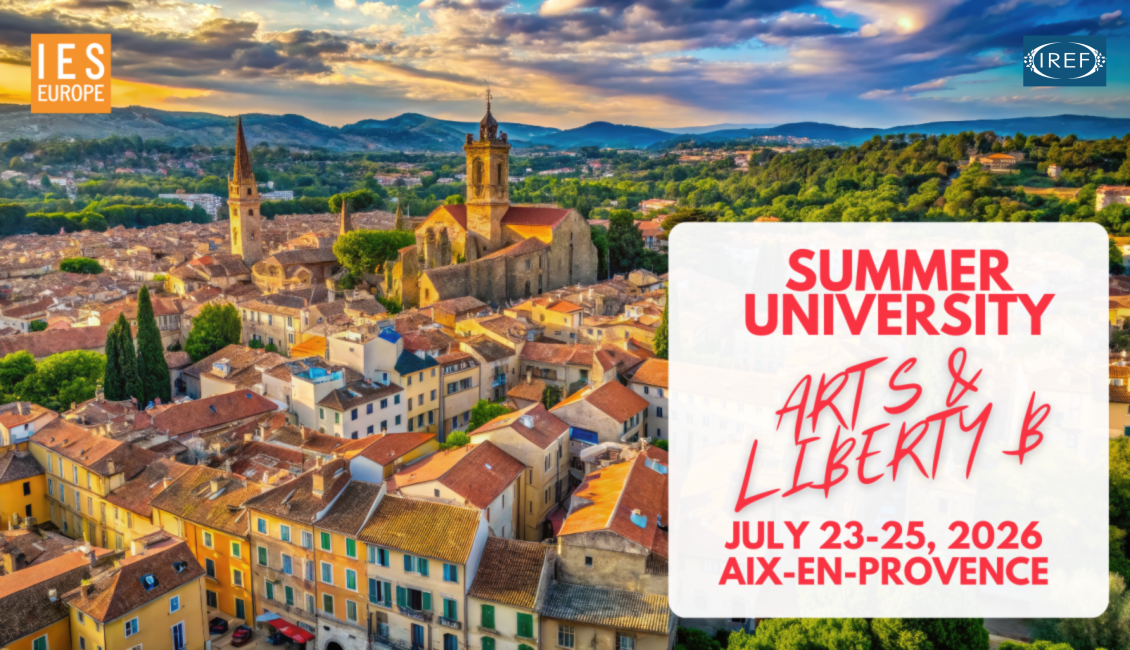
Arts & Liberty
Share This Event
Arts & Liberty: How can they serve each other
Across the world, liberal societies are under strain. Prosperity remains, but confidence in the values that made it possible is fading.
To understand why—and how to move forward—we must return to a key insight of liberal thought: a free society cannot be understood through reason alone. It also depends on what people feel, value, and aspire to.
The vision of society developed by liberal thinkers over decades—even centuries—has been grounded in the observation of the real world and of human behavior. What matters to people? What motivates them? What moves or outrages them?
It is no coincidence that Adam Smith’s The Theory of Moral Sentiments went through six editions during his lifetime, compared to “only” five for The Wealth of Nations. Nor is it by chance that the Scholastics of the School of Salamanca contributed early to liberal thought, or that foundational texts such as the Bill of Rights and the Declaration of the Rights of Man and of the Citizen emerged in times of deep crisis.
Today, our societies face new crises—violent in some regions, more subdued in others. In France, for instance, economic difficulties, strained public finances, and political instability are evident. Elsewhere, authoritarian tendencies are on the rise. Liberal values, which once fostered unprecedented prosperity and relative social harmony, are no longer as widely shared.
If we are to restore peace and prosperity, we must understand the causes of this drift. For decades, the Summer University of New Economics in Aix-en-Provence has sought to do so, highlighting misguided policy choices and revisiting the lessons of The Wealth of Nations. This effort remains essential—but it is not sufficient.
By focusing primarily on reason, we have overlooked the role of emotions. Yet individuals respond to both. Experimental economics confirms that while rational behavior explains much in market contexts, non-market choices—such as the kind of society we wish to live in—are also shaped by emotions.
If liberal democracies are to be renewed, we must once again take emotions seriously, as early liberal thinkers did. And emotions are the natural domain of the arts. This is why this Summer University is dedicated to the relationship between Arts and Liberty.
For this edition, we bring together two worlds that too often remain separate: academics—economists, legal scholars, philosophers, historians—and artists—musicians, writers, producers, painters, and visual creators.
Through lectures, discussions, but also some artistic performances, we will explore how the arts both depend on freedom and help illuminate the ideal of an open society—one grounded in liberty, responsibility, and property—by appealing not only to reason, but also to emotion.
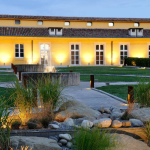
Hotel Aquabella, Aix-en-Provence
–Pierre GARELLO (Aix-Marseille University & IES-Europe):
Liberalism’s wings
-Prince Michael von Liechtenstein (Industrie- und Finanzkontor Ets, GIS & IREF):
Welcoming address
–Jean-Philippe DELSOL (IREF):
La culture de la liberté
Angel et Vera (Music)
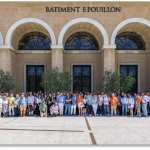
Plenary sessions with simultaneous translations / Session plénière avec traduction simultanée
–Pierre GARELLO (IES-Europe & Aix-Marseille University):
Welcoming address
-Jean-Baptiste PÉRIER (Dean of the Law School - Aix-Marseille University)
Why Arts & Liberty
Moderator: Pierre Garello
–Deirdre McCLOSKEY (University of Illinois at Chicago, Cato Institute):
How 250 years of economics, history and philosophy brought us here today to discuss Arts & Liberty
–Elisabeth KRECKE (Economiste et artiste) & Carine KRECKE (Artiste et Auteure):
stARTing to look
Arts serving liberty: literature and music
Moderator: Nathalie Janson
–Carlo LOTTIERI (Pegaso Telematic University, IBL):
Avant-garde Music: A Political Issue
–Frédéric SAUTET (The Catholic University of America):
Jacques Offenbach, artist and entrepreneur
–Romain MARSILY (Producteur, Conseill éditorial):
Fiction: Le héros et la liberté
Arts and freedom of expression
Moderator: Jean-Pierre Chamoux
–ZHANG ZHANG (fondatrice de ZHANGOMUSIQ et chroniqueuse à Le Droit de Vivre): Defending Freedom in the World of the Arts):
Protéger les libertés dans le domaine de l’Art
–Nicolas LECAUSSIN (Media Director, Contrepoints):
Les outils de la censure contre la culture et les libertés
–Vera CHANDELLE (musician/actress):
culture avant, pendant et après le communisme: l’expérience bulgare
Room : Amphi Dumas et Amphi Mistral – Faculté de Droit et de Sciences Politiques
Session in english : The importance of storytelling
Moderator: Kerry Halferty - Hardy
-Terry & Matt KIBBE (Free the People):
How to unite free thinkers
-James TOOLEY (University of Buckingham):
The Beautiful Tree & Imprisoned in India
Session en français: Réflexions des penseurs libéraux sur l’Art
Modérateur: Jean - Philippe Delsol
-Yorick de MOMBYNES (Senior Public Auditor):
Ayn Rand et la psycho-épistémologie de l'art
-Karl-Friedrich ISRAEL (Université Catholique de l’Ouest):
Commerce, Culture, et les Arts chez Adam Smith
Session in english : Culture in theory and practice
Moderator: Radu Nechita
-Petar GANEV (Institut for Market Economics, Sofia & Levski Sofia):
The Spontaneous Order of Play: How Athletes Create Rules Without a Ruler
-Eszter NOVA (Cevro Institute, Prague):
The ethics of heroes
Session en français : L’éco-système de la création artistique
Modérateur: Carine Krecké
-Sophie KRUPA (Université d’Orléans):
La maladie des coûts du spectacle vivant
-Erwan LE NOAN /Arthur LANOS (Essayiste, Directeur de l’IREF):
Ce que l’Art doit au libéralisme
Ana SILVESTRU
La musique portant la liberté
Amphi David, FDSP
–Eduardo NOLLA (Professor of Political Theory)
The Art of Liberty
Zhang Zhang &
Leopoldo Giannola
Emmanuel Martin
& Debazine
Anna Roberta (Estonian National Ballet)
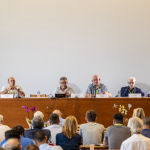
Plenary sessions with simultaneous translations / Session plénière avec traduction simultanée
Arts & Liberty seen from the point of view of philosophy
Moderator: Elisabeth Krecké
–Douglas RASMUSSEN (St. John’s University):
The Challenge of Post-Liberalism
-Philippe NEMO (Directeur de l’Ecole professorale de Paris) :
Esthétique de la liberté
Expression of freedom in cinematic and musical works
Moderator: Lord Syed Kamall
–Erwan QUEINNEC (Université Sorbonne-Paris Nord) IA, Créativité musicale et liberté
–Gabriel CALZADA (Universidad de las Hespérides):
How Film can Serve as a Vehicle for Understanding Markets and Liberty
-Angelica WERTH (The Objective Standard Institute):
Self-Esteem and Liberty in The Handmaid's Tale
Expressions of freedom in Architecture, Urbanism and Design
Moderator: Christian Nasulea
–Alain BERTAUD (Urbanist, Mercatus Center & NYU Marron Institute):
Red Lines: Art, Censorship, and the Persistence of Freedom
–Dominique LAZANSKI (University of Pittsburgh):
The Freedom to Remember: How Ukraine is Rewriting their History through Monuments and Architecture
–Will OGILVIE (Universidad de las Hesperides) :
The Aesthetics of Place: Beauty, Freedom and Human Dignity
Amphi Dumas et Amphi Mistral – faculté de Droit et de Sciences Politiques
Session in English : The economics of Arts
Moderator: Nouh El Harmouzi
-Richard DURANA (INESS & Musician):
Intellectual Property Rights and Creativity
-Diana NĂSULEA (University of Bucharest, IES-Europe):
Should Taxpayers Pay for Swan Lake? The economics behind the stage
-Lord Syed KAMALL (Buckingham University):
Arts without subsidies
Session en français : L’Art de jouer avec les statistiques
Modérateur: Elodie Messéant
-Gilbert BOUGI (Aix-Marseille Université) :
L'évolution du marché de l'art : entre efficience et créativité entrepreneuriale
-François FACCHINI (Université Paris 1):
L'art des statistiques et la défense de la liberté
-Kerry HALFERTY-HARDY (IES-Europe et ESCP):
L’espace entre l’artiste et l’Etat
Session in English : Thinking outside the box
Moderator: Nathalie Janson
-Nathalie JANSON (Neoma Business School):
Blockchain, IA and New forms of Art:
-Casey Joly (Avocate):
Is the Work Itself Enough? Art, AI, Blockchain: From Originality to Provenance
-The Artist G:
Blockchain, NFT : a decentralized market for artists?
-Olivier PINSON (Entrepreneur):
The Libertis.net project
Session en français: Les politiques culturelles
Modérateur: Renaud Fillieule
-Kevin BROOKES, Sacha BENAHMOU (Génération libre):
Bilan des politiques culturelles menées en France
-Lisa HIRSIG (Enseignante et essayiste)
La culture vue par l’Education nationale
- Javier FERNANDEZ-LASQUETTY (Economiste, Ancien Ministre de l’immigration):
Penser les politiques de l’immigration différemment: l’expérience madrilène
Moderator: Jovana Dikovic & Pierre Garello
“The Art of Inflation” (an MPI Original Film)
“Festival for Freedom” by Milica, Marija, Neda, Filip and Aleksandar
Erwan QUEINNEC & Catherine POUGET: Welfare State (Clip et performance)
–Tom G. PALMER (Atlas Network and Cato Institute):
Moral sentiments, Sentimental Morality, and Aesthetics
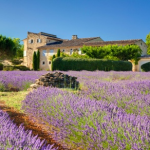
Invited musicians and dancers
Vera CHANDELLE et Angel ZABERSKI
LIBERTY ROCK BAND (Richard, Emmanuel, Kevin, Syed & Vera)
GETTING TO AIX-EN-PROVENCE
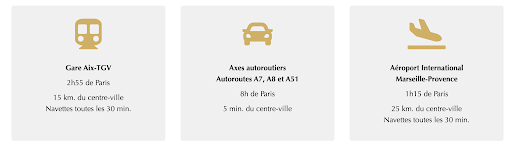
Faculté de droit et de science politique d'Aix-Marseille
3 Av. Robert Schuman, 13100 Aix-en-Provence
STAYING IN AIX-EN-PROVENCE :
The Originals approximately 157 € (prices subject to change): https://www.theoriginalshotels.com/hotels/aix-schuman?gclsrc=aw.ds&gad_source=1&gad_campaignid=20009870366&gbraid=0AAAAAC-TT1IIr9NgLBqnnSBZDakEDQckJ&gclid=CjwKCAjw1tLOBhAMEiwAiPkRHmxjswm5vOJV0yNwt1Bab15Rk9m6QzLHvxXy_4IPP4xfguCZgph19hoC0gkQAvD_BwE
Roi René approximately 250 € (prices subject to change) : https://mgallery.accor.com/fr/hotels/1169.html?merchantid=seo-maps-FR-1169&sourceid=aw-cen&utm_source=google+Maps&utm_medium=seo+maps&utm_campaign=seo+maps&utm_term=MGallery-Launch
Cézanne approximately 286 € (prices subject to change) : https://boutiquehotelcezanne.com/
Rotonde approximately 200 € (prices subject to change) : https://www.hotel-rotonde.com/
Saint Christophe approximately 295 € (prices subject to change) : https://hotel-saintchristophe.fr/
Aquabella approximately 250 € (prices subject to change) : https://www.aquabella.fr/
GOING OUT IN AIX-EN-PROVENCE : https://www.aixenprovencetourism.com/
 Montreal Economic Institute
 EPICENTER
 Law School Aix Marseille University
 ATLAS Network
 Generation Libre
 Rising Tide Foundation
 |
 |